“I have a WordPress site where I have my site/shop/blog but it’s only in Italian. I would like to be able to have the site/shop/blog in other languages without duplicating the entire site for every language. Is that possible?”
This is one of the most common questions when trying to expand the audience of your site and need to “internationalize” your online presence.
There are therefore two ways to have a multilingual online presence:
- Duplicate and replicate the site for every language in which it is to be published maintaining every single copy;
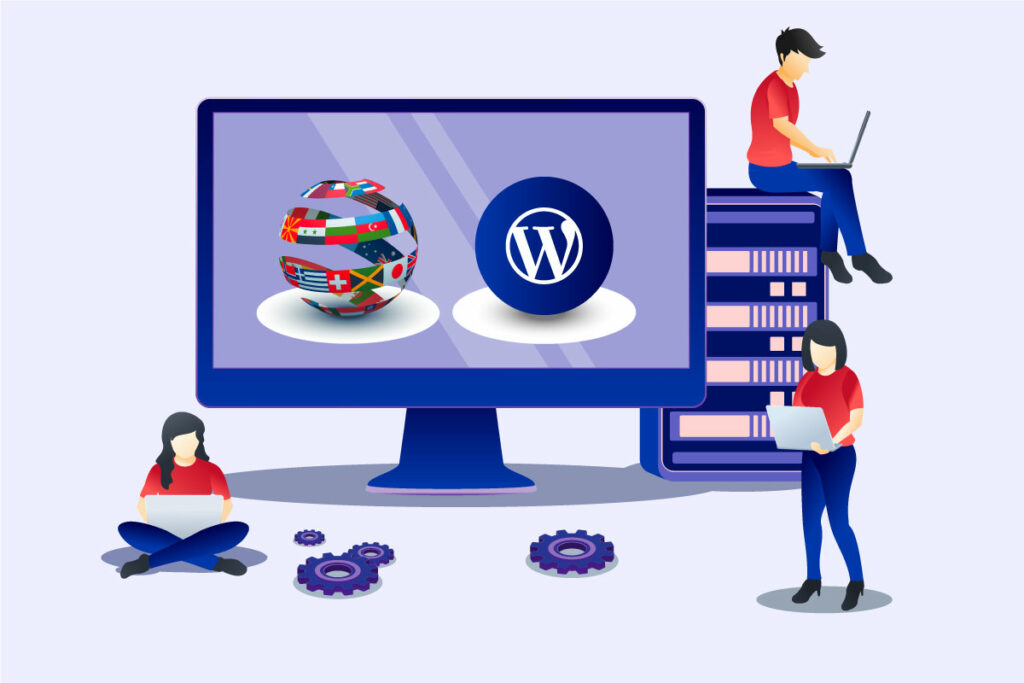
- Use a multilingual plugin that provides pages based on the language chosen by the user, allowing for easier management of the whole.
Obviously the second is the more practical choice and that we recommend to implement.
Having an integrated system in WordPress is possible to obtain a multilingual site more easily. The plugins currently on the market are designed precisely to integrate with WordPress and all its components (themes, contents, functions added by other plugins) in order to minimize human intervention to the maximum.
In this article we will see in detail how this useful tool works.
Table of contents
What are the advantages of having a multilingual plugin
The plugin that adds multilingual features allows for a series of utilities that leverage existing WordPress functions to serve the correct translation.
WPML is a plugin that has many advantages compared to other less known or less widespread plugins. Let’s give some examples. Usually, forms are managed through plugins, with others specifically dealing with privacy and feedback submission to the site manager.
Having a well-known and tested plugin by millions of online users like WPML makes it easy for the other plugins used to be configured to collaborate correctly and have the forms translated into the language of the page in question.
Advantages of WPML
WPML is a true giant. In the WordPress world, WPML is the system used for translating websites and this means that, in addition to all the benefits of a translation plugin, it has additional features that have been developed precisely because the team that implemented it over the years is very structured. Thanks to this enormous work, today WPML offers various advantages. Let’s see them together.
– Constant development of new features and bug fixes
The base for a good plugin is that it be updated over time and that any bugs be corrected soon. WPML is constantly updated and corrected furthermore it has a long backward compatibility that allows having the latest version of WPML even on obsolete or non-upgradeable versions of WordPress.
– Plugins and themes directly compatible
Many third-party plugins and themes, like many plugins that add page visual composition functions, are developed with WPML implementation in mind and have a system of continuous testing with its new features. This ensures that, when we install WPML, we can be sure of the plugin compatibility.
– Integrated directly with the WordPress APIs
WPML is designed with the WordPress APIs at its core. This allows all plugins and themes that correctly use the WordPress APIs to be automatically compatible with WPML and consequently be used on a multilingual site without issues.
Try Hosting4Agency on a site of your choice for 30 days and compare the performance before/after the trial period!
– Implementation of SEO functions
The plugin WPML has a series of features to manage a variety of SEO issues such as URLs in case of multiple languages, language-specific meta information and optimizations for Google Webmaster validation.
– Automatic Translations
Some of the translations by WPML are automatic, reducing thus the times to fix all the contents of a website.
Why choose a professional plugin
Seen all these benefits we talk about the painful ones: WPML has a cost.
Obviously this detail pushes someone to consider free multilingual plugins to save money.
The following are some important aspects to consider if you choose to save:
- the free plugins are usually not tested sufficiently to check integrations with other software;
- a free plugin is usually the “trial” or “limited” version of a Pro plugin or the project of an independent developer who might stop developing it at any moment. In both cases, a paid plugin is therefore preferable as it is a more “complete” version;
- might not handle the SEO part correctly.
It seems like a minor issue, but if the plugin in question does not allow you to manage and customize the SEO part of the content based on language, it could lead to incorrect indexing of the contents and therefore to a penalty by search engines.
WPML Conclusions
For a correct management of multilingual sites that includes content management, translations, and multi-language SEO indexing, we recommend relying on paid plugins that guarantee stability, compatibility, and an update over time, like WPML.
This plugin offers many advantages:
- the installation is quick and intuitive;
- it is a reliable plugin, continuously updated to make it always simpler and easier to use;
- permits automatic or manual translation;
- it is possible to request the human translation service through the purchase of the translation service;
- integrates with WooCommerce;
- integrates perfectly with WordPress themes;
- service customer in 9 languages.
The plugin multilingual WPML is the most versatile tool to reach your potential customers worldwide.
To avoid problems and reduce times it is always better to rely on professionals in the sector with specific experience.
WPML Pro is included in our custom hosting plans. What are you waiting for?
Leave it to us and make your site multilingual without stress.