

Choosing the right hosting service for Django applications is fundamental to ensure optimal performance, security, and scalability. In this article, we will explore the best hosting options for Django, covering all phases, from development to deployment, with a particular focus on cloud hosting, production configuration, and the use of VPS.
What is Django Hosting?
“Hosting Django” refers to server solutions configured to support and run applications developed with the Django framework. Options range from dedicated servers to VPS, shared hosting, and cloud solutions, each with specific characteristics that affect performance, scalability, and control.
Best Hosting Options for Django
1. VPS (Virtual Private Server)
A VPS is a machine that hosts the software and data necessary to run an application or website, offering dedicated resources within a virtualized environment, ensuring a balance between cost and performance. This solution is ideal for medium-sized Django applications that require customized configurations and greater control over the server environment.
2. Cloud Hosting
Cloud platforms, such as AWS, Google Cloud, and Microsoft Azure, offer high scalability and flexibility. These solutions are ideal for Django applications that need to quickly adapt to traffic variations, ensuring on-demand resources and high availability. Cloud hosting provides more RAM, storage space (including data storage), and security compared to other hosting services.
3. Dedicated Server
For large-scale Django applications with specific performance and security requirements, a dedicated server may be the best choice. It offers maximum control and fully dedicated resources, although at a higher cost compared to other solutions.
How to deploy Django on a server
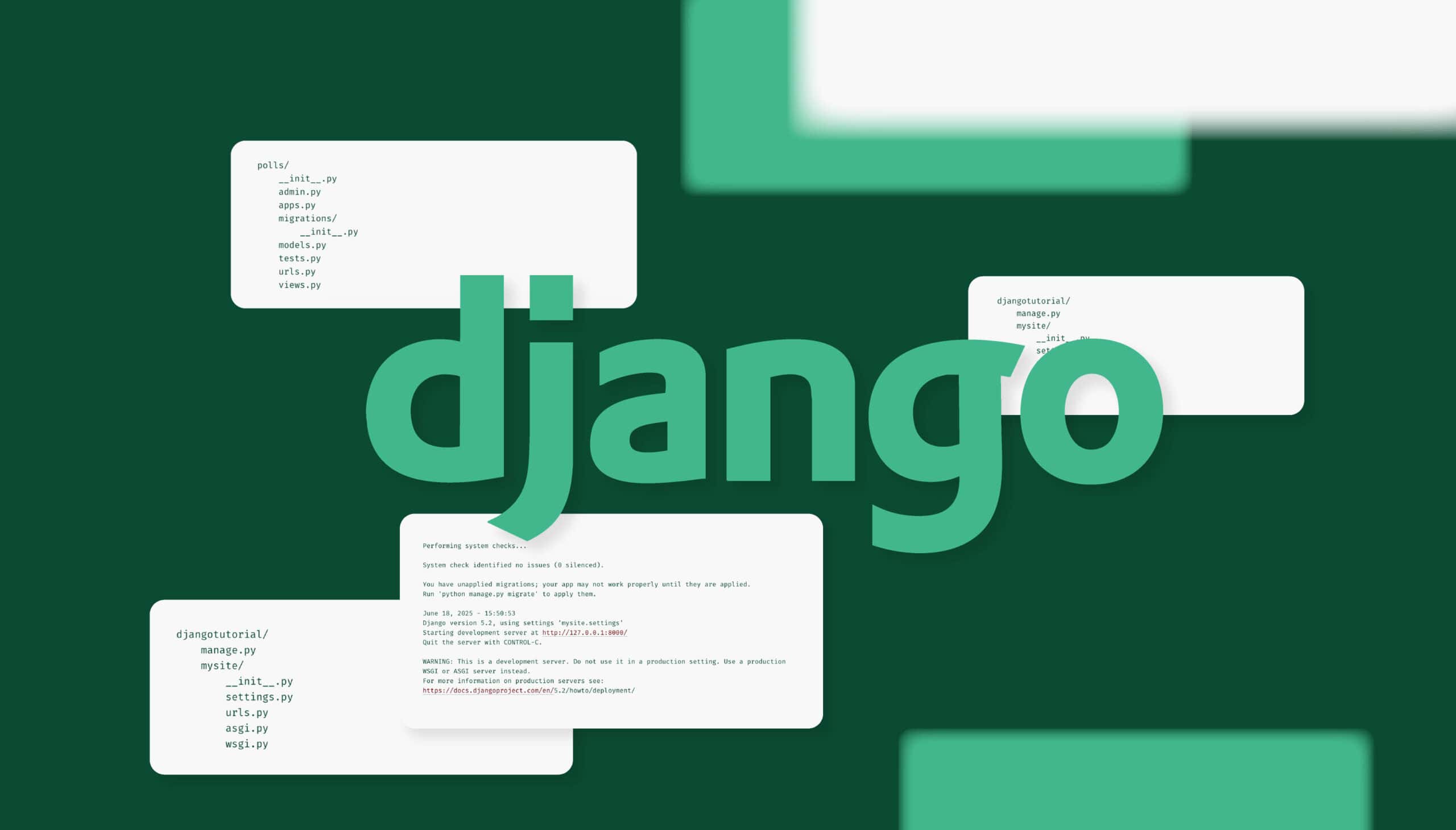
To start, what does “deploying Django” mean? It means making an application or a website created with the Django framework available online for users. This process includes several steps, such as code preparation, web server and database configuration, and finally bringing it into operation.
Deploying a Django application requires a series of fundamental steps to ensure a stable and secure production environment.
1. Environment Preparation
- Install Python and Django: Ensure that the server has the appropriate versions of Python and Django installed.
For Python, you can download the installer from the official site (https://python.org). Django also requires pip to be installed, which can be done as follows:
– In the terminal write python -m pip install –upgrade pip
– Install Django with the command pip install django
– Verify installation with django-admin –version - Dependency Management: Use tools like pip and virtual environments (venv) to manage project dependencies in isolation.
2. Database Configuration
Briefly, what is a database? It is an organized collection of digital data designed to be managed, retrieved, and used efficiently.
- Database Selection: Choose robust databases like PostgreSQL or MySQL for the production environment, configuring them to ensure reliability and performance.
3. Web Server Configuration
- WSGI Server: Serves to mediate communication between the web server and the Python application. Implementing a WSGI server like Gunicorn or uWSGI helps manage Django application requests. hosting4agency.com+4hosting4agency.com+4hosting4agency.com+4
- Reverse Proxy: Acts as an intermediary between the web server and the external world. Use Nginx or Apache as a reverse proxy to manage client connections, load balancing, and security.
4. Static and Media File Management
- Static Files Service: Configure the server to serve static and media files correctly, using external storage services if necessary to improve performance and scalability. Static files contain immutable data.
5. Security
- SSL Certificates: Implement HTTPS using SSL certificates to ensure the security of communications. These certificates authenticate the website’s identity and enable encryption of data in transit between the user’s browser and the web server.
- Updates and Patches: Keep all system components up to date to protect the application from known vulnerabilities.
6. Backup and Monitoring
- Regular Backups: Plan automatic backups of the database and files to prevent data loss.
- Monitoring: Implement monitoring tools to keep an eye on server and application performance, ensuring timely interventions in case of anomalies.
Final considerations on choosing a Cloud Hosting
The adoption of cloud solutions for Django application hosting offers numerous advantages, including:
- Dynamic Scalability: The ability to adapt resources in real-time based on the workload.
- High Availability: Redundant infrastructures that guarantee high uptime.
- Simplified Management: Access to managed services that reduce operational complexity, allowing the team to focus on application development.
However, it is essential to carefully evaluate associated costs and ensure that the chosen infrastructure is configured to optimize performance and security of the application.
Our proposal
At Hosting4Agency, we offer Django hosting solutions on Debian Plesk servers, containerized with Docker and equipped with autoscaling to manage load variations without interruptions. Choosing the right hosting can make a difference in the success of your Django project. Consider your options, evaluate your needs, and choose a hosting partner that can grow alongside your application.
Sponsor PyCon Italia 2023+2024 from italia import 🤌
Did you know that we were the Startup Sponsor of PyCon Italia in 2023 and 2024?
An interesting event held in Florence, where thousands of enthusiasts, developers, professionals, and companies from all over the world meet to share experiences and discover the latest news on Python.
from italia import 🤌