

PHP continues to evolve.
And while it may not make headlines like it did ten years ago, today it still remains the backbone of the web: WordPress, Drupal, Joomla, Magento, Prestashop, as well as modern frameworks like Laravel and Symfony, rely on this language every day.
For this reason, every new release is relevant not only for developers but also for those who manage websites, applications, e-commerce, and digital infrastructures.
The new version, PHP 8.5, is not a generational leap like PHP 7 or PHP 8.0, but an important update that improves code quality, readability, debugging and—bonus—introduces also performance optimizations.
In this guide you will find a complete overview of the functions and features you need to know. Perfect for developers, companies, and webmasters.
What introduces PHP 8.5: the main novelties
The 8.5 follows the path already traced by the 8.4: more modern, more readable, more coherent language. It does not revolutionize, but refines.
Here are the most relevant updates.
Pipe Operator (|>)
It is the star of the release.
It serves to “pass” the value from one expression to the next with a natural and ordered syntax, especially in data transformation flows.
Example simple:
$result = “Hello World”
“`html |> htmlentities(…) “`
|> str_split(…)
“`php |> fn($chars) => array_map(strtoupper(…), $chars); “`
You would have had to nest functions within functions, resulting in much harder-to-read code.
New functions on arrays
Arrive two small but useful functions:
- array_first()
- array_last()
Eliminate dozens of workarounds like reset(), end(), involuntary casts or custom polyfills.
Example:
$items = [‘a’, ‘b’, ‘c’];
array_first($items); // a
array_last($items); // c
It may seem trivial, but in practice it reduces errors and repetitive code.
Improvements in debugging: Stack trace in fatal errors
Finally you can see where a fatal error comes from, even those brutal ones like memory exhaustion.
Basta activate:
fatal_error_backtraces = 1
This feature, for those who do debugging, is worth an update on its own.
Two new features:
- get_error_handler()
- get_exception_handler()
They are used to obtain information on active handlers.
They are particularly useful for frameworks, libraries, logging tools, and monitoring systems.
Memory management: max_memory_limit
Allows to explicitly set a maximum memory limit for scripts.
Great for CMS, plugins and potentially “hungry” cron jobs.
Improvements for internationalization
Functions as:
- locale_is_right_to_left()
- Locale::isRightToLeft()
simplify the management of RTL languages (Arabic, Hebrew).
Closure in constant expressions
Novelties interesting for configurations and handlers:
class Config {
public const HANDLER = static function() {
return “fallback”;
};
}
It was forbidden before. Now it opens new possibilities.
PHP 8.5 vs PHP 8.4
| PHP 8.4 | – Property hooks (getter/setter inline) – Asymmetric property visibility | Important syntactical changes | Modern and controlled class structure |
| PHP 8.5 | – Pipe operator – New array functions – More powerful debugging | Productivity release | Clearer reading and code quality |
In brief: from a developer’s perspective, PHP 8.5 is more convenient, clearer, and easier to maintain.
Performance: how much faster is PHP 8.5 really?
Here it is good to be clear:
there are no official benchmarks that say “PHP 8.5 is 14% faster than 8.4”.
However, the release brings real improvements:
- optimizations in the Zend engine
- more efficient core functions (array*, mb_*, iterative functions)
- more stable memory management
In high-load applications — API REST, microservices, e-commerce with heavy traffic — these improvements are tangible.
New syntax and functions: concrete examples
Before (PHP 8.4)
$result = array_map(strtoupper,…,)
str_split(
htmlentities(“Hello World”)
)
);
Now (PHP 8.5)
$result = “Hello World”
“`html |> htmlentities(…) “`
|> str_split(…)
“`php |> fn($chars) => array_map(strtoupper(…), $chars); “`
Much more readable.
Array_first and array_last functions
$orders = [
‘first’ => 101,
‘second’ => 205,
‘last’ => 309
];
array_first($orders); // 101
array_last($orders); // 309
Compatibility, Deprecations and Migration
The good news is that PHP 8.5 maintains a high level of compatibility with PHP 8.4.
For modern and updated projects, the transition is generally smooth and without drastic changes. However, as always when introducing a new language version, there are some aspects worth considering before proceeding.
Depreciations to keep an eye on
PHP 8.5 removes or marks as deprecated some features that may still be in use in older projects, including:
- the constants MHASH_* , now surpassed;
- some scalar non-canonical casts;
- functions legacy or patterns no longer aligned with modern language guidelines.
Non are traumatic changes, but problems may emerge if the project uses outdated components or unmaintained plugins.
Even though the upgrade is relatively simple, it’s important to verify the ecosystem compatibility:
- plugin and external libraries
- frameworks used
- PHP extensions installed
- eventual customizations of the CMS
- infrastructure and hosting (not everyone adopts PHP 8.5 immediately)
These areas, rather than PHP itself, determine the success of the update.
Why not update “blindly”
A migration done without checks can cause:
- errors in production,
- incompatibility with plugins or themes,
- malfunctions in integrations,
- problems difficult to diagnose later
Impact on frameworks and backend development

Laravel
- pipeline more readable with the pipe operator
- debugging improved
- cleaner syntax for transformations and DTO
Symfony
- richer logging and profiling
- improve work on transformers and validators
WordPress
Here caution is mandatory:
- some hosting will adopt PHP 8.5 more slowly
- many plugins do not update quickly
- it is fundamental to test in staging
Magento and complex e-commerce
- small performance improvements
- comprehensive debugging and monitoring
- useful in cron jobs and batch scripts
API and microservices
- cleaner data pipeline
- more immediate array functions
- reduction of noise in logs
Best practices for effectively using PHP 8.5
PHP 8.5 introduces useful improvements, but the real value depends on how they are integrated into the project. Here are the points that really matter.
- Use the pipe operator only when it improves readability
Perfect for pipelines and transformations; less useful where it complicates the code. - Integrate the new array functions consistently
array_first() and array_last() avoid historical workarounds and make the code clearer. - Make use of improvements in debugging
Extended stack traces help reduce blind diagnosis. - Set memory limits consciously
The new directive max_memory_limit is useful in heavy processes, but requires a minimum of monitoring. - Keep an eye on warnings
Reduces the risk of future errors and keeps the stack solid over time. - Keep internal team coherence
New features work better when used with a shared guiding line. - Evaluate the impact on performance
Every application reacts differently: observing real behavior avoids unnecessary assumptions.
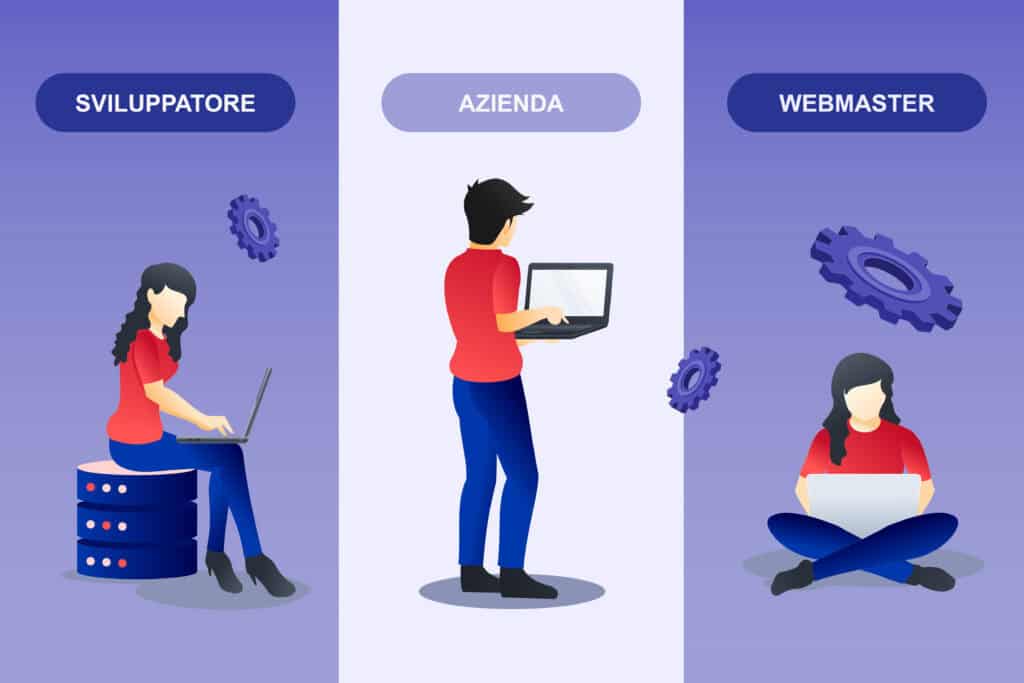
What changes for developers, companies, and webmasters
For developers
- more readable code
- less boilerplate
- better debugging tools
- pipeline clearer
- new useful and clean functions
For the businesses
- higher stability
- debugging simpler = less intervention time
- performance increments without investing in hardware
- reduction of technical debt over the long term
For webmasters
- tests on essential plugins
- check hosting compatibility
- never update directly in production
- use staging and complete backups
Conclusions
PHP 8.5 is a mature release.
It doesn’t change everything, but it improves many things that really matter: readability, debugging, syntax, performance, and resource management.
For those who develop it is a natural upgrade.
For those who manage sites and applications it is an investment in stability.
For those who work in company it is a way to reduce future maintenance costs.
If you are already on PHP 8.4, the update is recommended and simple.
If you are further back, PHP 8.5 is a great opportunity to put order in your stack.
The safest way to decide whether to switch to PHP 8.5
Updating to PHP 8.5 is not just a matter of selecting a different version in the panel:
it depends on extensions, plugins, libraries, server configurations, and the hosting on which the project runs.
We can verify the compatibility of your stack and indicate the safest upgrade path, evaluating risks, timelines, and real impacts.
And if your hosting is not ready for PHP 8.5 or requires complex interventions, we can handle everything on our infrastructure so you avoid blocks, surprises, and unexpected costs.
Write down which sites or applications you want to check: we prepare a clear technical analysis and tell you what is the best solution – whether to update PHP or to simplify management in the long term.